Web design and development: Sohrab Kashani (Design work)
Sazmanab Center for Contemporary Art (2014–2018) is
Sazmanab presents works and video pieces by Iranian artists at the 2018 Taiwan Annual, drawing from its Video Library and broader programme.
Wiki-Women-Middle East activates a translocal editing network to write Middle Eastern women cultural practitioners into Wikipedia, using collective authorship as a feminist intervention in historical visibility.
Shattered Frames foregrounds experimental video as a lens through which artists articulate fractured realities, lived contradictions, and subjective experiences within contemporary Iran.
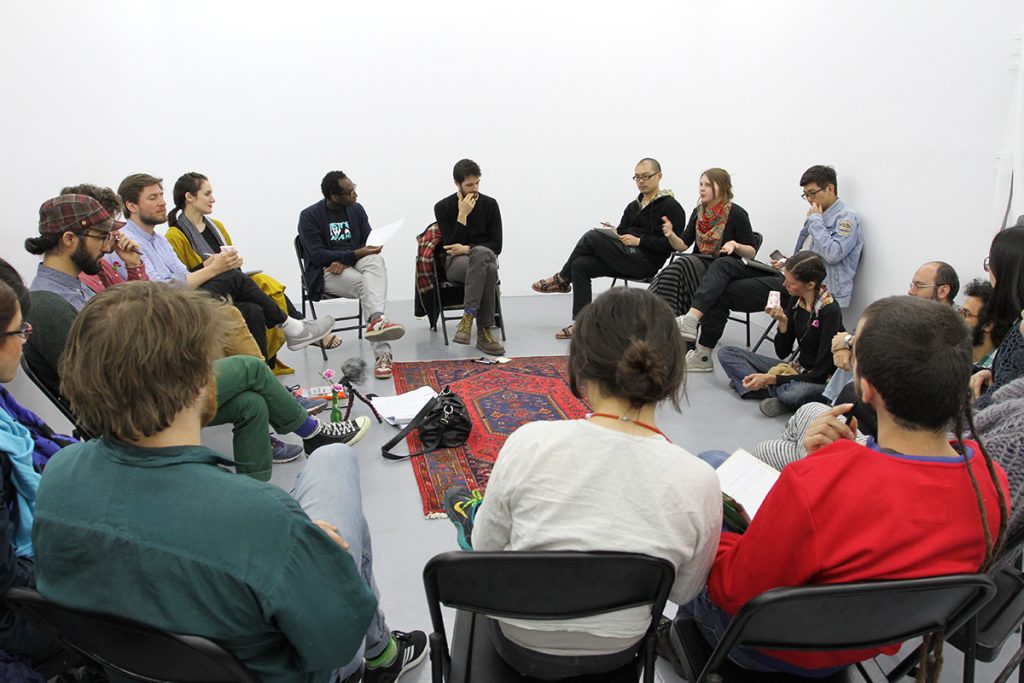
A performance presentation examining the relationship between everyday life and artistic practice, developed through dialogue with local contexts and realised collectively at Sazmanab.
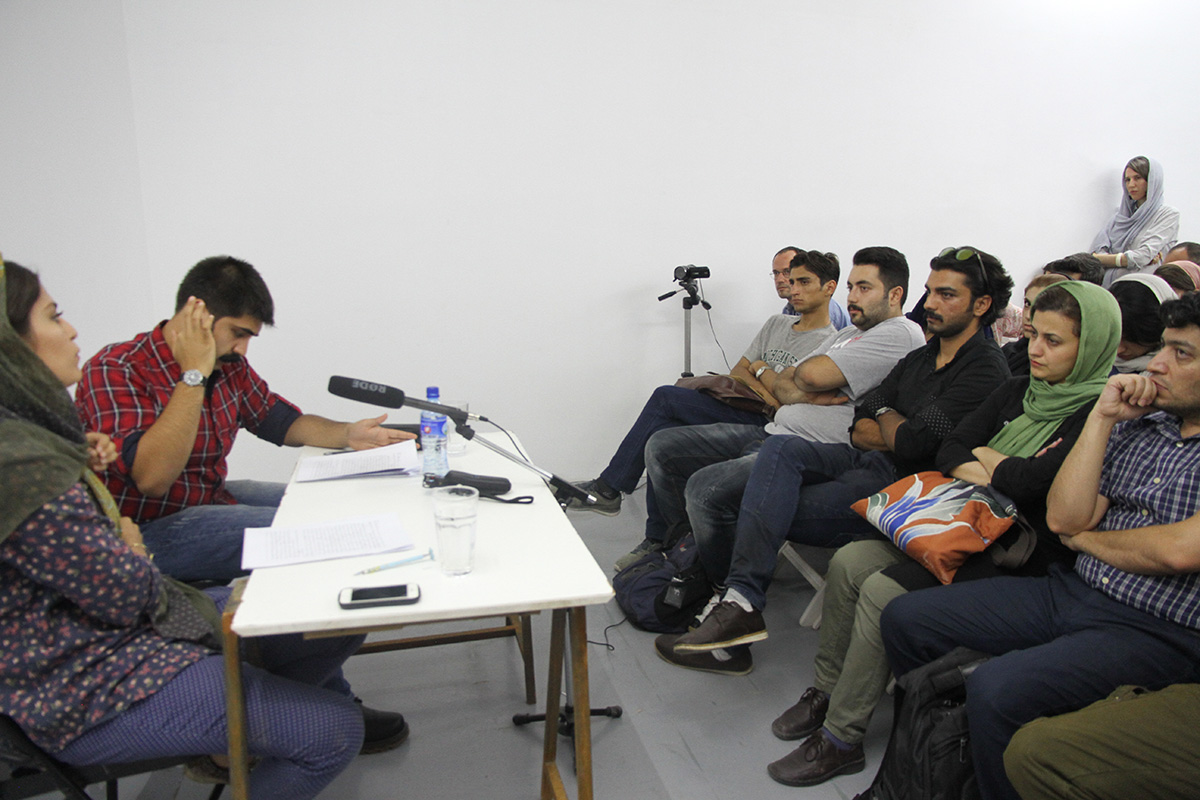
A public conversation reflecting on Metaphor and Politics: The Tehran Retrospective of Harun Farocki, examining Farocki’s work through questions of image-making, power, and political representation.
A retrospective of Harun Farocki’s film and video works, examining images, labour, warfare, and the politics of representation, marking the final exhibition at Sazmanab’s Khaghani venue.
An artist talk reflecting on Freund’s recent exhibition at Sazmanab, addressing historical memory, testimony, and the role of fiction within documentary and video practice.
A presentation of three video works by Peter Freund examining translation, testimony, and historical memory through entangled narratives of Iran and the United States.
An artist talk by Stephen Young reflecting on the exhibition Macro or Micro? Misinterpreting the Unfamiliar, exploring scale, perception, and the consequences of mistaking individual details for broader cultural truths.
An exhibition combining satellite imagery and electron microscopy to explore how patterns repeat across scales, examining perception, misinterpretation, and the ways unfamiliar details are mistaken for broader truths.
A screening of Bart Van Dijck’s film The weather was good, examining folk traditions and cultural identity in Belgium through rituals, festivals, and collective practices.
Public screenings and discussions from the 2015 Creative Time Summit at La Biennale di Venezia, exploring expanded notions of curriculum, knowledge production, and the role of artists and activists in shaping social and political discourse.
A solo exhibition by Dejan Kaludjerović presenting a multi-channel sound installation based on interviews with children, using play and dialogue to examine social values, identity formation, and the ways societies construct difference and belonging.
A lecture by Jeroen Gerrits examining Werner Herzog’s documentary practice, focusing on docufiction, digital media, and the ways extreme environments and recording technologies reshape cinematic representations of reality.
The debut event of Re-shape Tehran, bringing together practitioners from art, design, and technology to explore the intersection of design and code through presentations on digital fabrication, generative systems, virtual environments, and biofeedback.
A public conversation with Reza Aramesh and Sohrab Kashani reflecting on their collaboration on Centrefold Issue 9 and the exhibition Spring of Recession, discussing publishing, collaboration, and artist-led approaches to archiving.
A live Portals event featuring classical Persian musicians performing across distance, bringing together audiences in Tehran and Washington D.C. through real-time audio-visual exchange and shared musical experience.
An exhibition and publication project by Reza Aramesh, developed in collaboration with Sazmanab, presenting the ninth issue of Centrefold alongside works by Iranian artists and proposing alternative, artist-led approaches to archiving and art history.
An artist talk by Marco Djermaghian reflecting on one-to-one scale, material making, and learning through urban experience, connecting architectural thinking with processes of making and living in the city.
An immersive installation by SHARED_STUDIOS connecting participants in Tehran and Washington D.C. through live audio-visual encounters, exploring presence, distance, and one-to-one exchange across cultural contexts.